

Have you ever craved a dish that’s both comforting and sophisticated? Creamy polenta with parmesan cheese might just be the answer! Traditionally a staple in Italian cuisine, polenta is made from cornmeal and can be a delightful side or even a stand-alone dish. Did you know that polenta can be ready in just 30 minutes? That’s right—the process is quicker than many other starches and allows you to create a luscious base for various toppings or sauces. Let’s dive into this delightful recipe!

Ingredients List
- 1 cup polenta (cornmeal)
- 4 cups water or vegetable broth for extra flavor
- 1 cup parmesan cheese, grated
- 4 tablespoons unsalted butter
- Salt, to taste
- Black pepper, to taste
- Optional toppings: sautéed mushrooms, roasted vegetables, or grilled meats
For those who are looking for substitutions, consider using vegetable stock instead of water for a richer flavor, or goat cheese in place of parmesan for a tangy twist.
Timing
The total time to prepare creamy polenta with parmesan cheese is about 30 minutes—comprising approximately 10 minutes of preparation and 20 minutes of cooking. This is significantly less than many traditional starch dishes, often taking over an hour. You can impress your guests or family with this flavorful dish in record time!
Step-by-Step Instructions
Step 1: Prepare the Ingredients
Gather all your ingredients, measuring them out for ease. Ensure your cheese is freshly grated for the best texture and flavor.
Step 2: Boil the Liquid
In a large pot, bring the water or vegetable broth to a boil over medium-high heat. Add a generous pinch of salt to enhance the flavor of the polenta.
Step 3: Add the Polenta
Once boiling, gradually whisk in the polenta, stirring continuously to prevent clumping. Reduce the heat to low and continue to cook, stirring frequently, for about 20 minutes until the polenta becomes thick and creamy.
Step 4: Mix in the Cheese and Butter
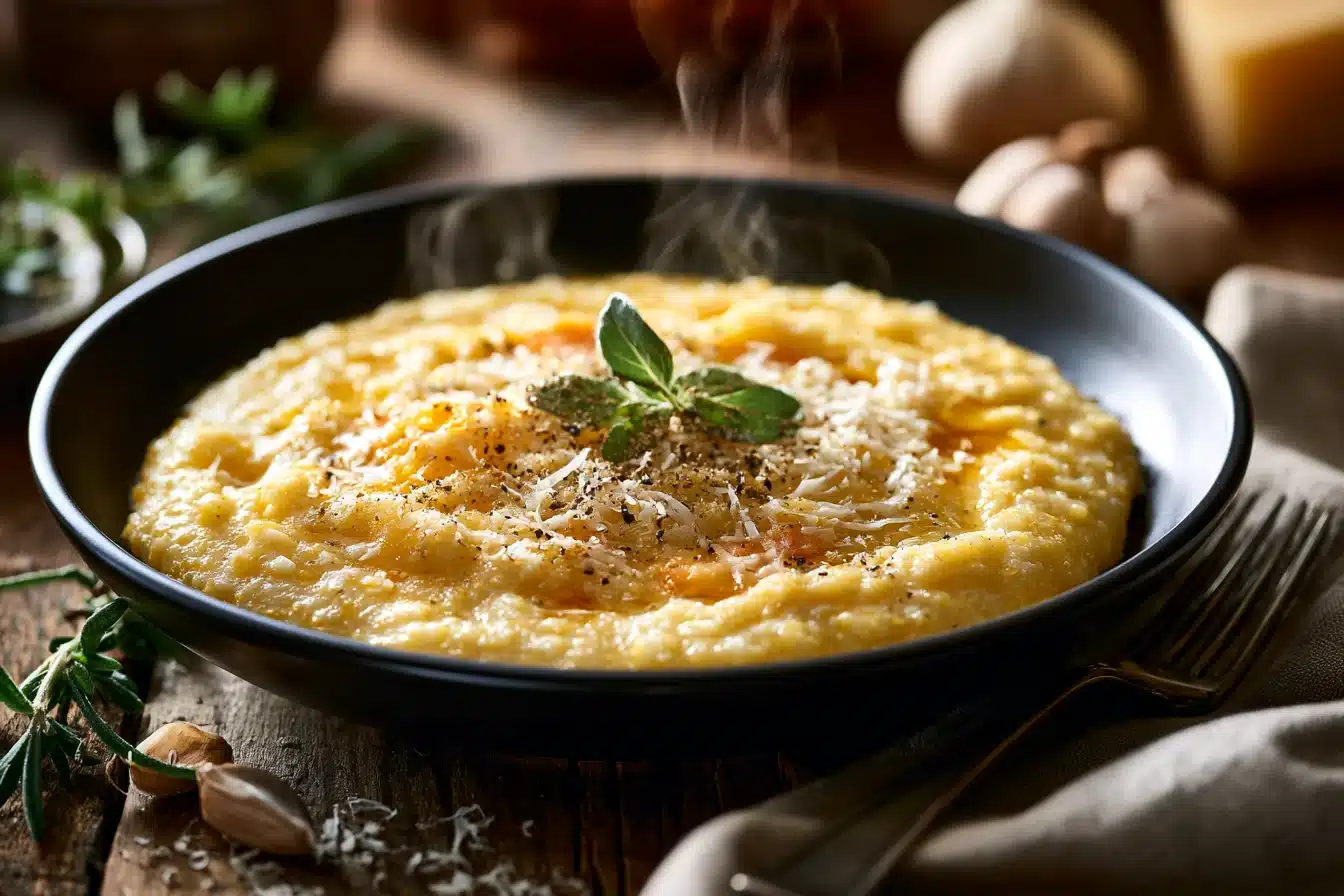
Remove the pot from heat and fold in the parmesan cheese and butter. Stir until melted and well incorporated, adding salt and pepper to taste. This creamy polenta with parmesan cheese will now be delightful and full of flavor!
Step 5: Serve and Enjoy
Transfer the creamy polenta into bowls or plates and top with your choice of sautéed mushrooms, roasted vegetables, or grilled meats. Enjoy it while it’s still warm!
Nutritional Information
- Calories: 250
- Protein: 9g
- Carbohydrates: 35g
- Fat: 10g
- Fiber: 2g
- Vitamin A: 10% of RDA
- Calcium: 25% of RDA
These numbers are based on a serving size of about 1 cup of creamy polenta. Adjust portion sizes based on your dietary needs or preferences!
Healthier Alternatives for the Recipe
If you’re looking for healthier options while still enjoying creamy polenta with parmesan cheese, consider the following substitutions:
- Use low-sodium vegetable broth to reduce sodium intake.
- Opt for whole grain or gluten-free polenta to suit dietary restrictions.
- Incorporate nutritional yeast in place of parmesan for a vegan option.
- Replace butter with olive oil or a vegan butter alternative.
These simple changes can help accommodate a variety of dietary needs while keeping the dish delicious!
Serving Suggestions
Creamy polenta with parmesan cheese makes a versatile base, perfect for many dishes. Here are some serving ideas:
- Pair it with a rich marinara sauce for an Italian-inspired meal.
- Top with sautéed greens and a poached egg for a hearty breakfast.
- Mix in roasted garlic and herbs for an aromatic side dish.
- Serve it alongside a protein like grilled chicken or fish for a balanced plate.
Presentation can elevate your dish: use white plates to highlight the creamy color and add a sprig of fresh parsley for a pop of color!
Common Mistakes to Avoid
- Not whisking continuously while adding polenta to boiling liquid can cause clumps.
- Using cold water instead of boiling can result in a grainy texture.
- Neglecting to stir the polenta as it cooks can lead to uneven consistency.
- Overcooking the polenta can make it too thick; always check its doneness.
By avoiding these mistakes, you’ll achieve perfect creamy polenta every time!
Storing Tips for the Recipe
Leftovers of creamy polenta with parmesan cheese can be stored for future meals! Here’s how:
- Let the polenta cool completely before transferring it to an airtight container.
- Refrigerate for up to 3 days or freeze for up to 2 months.
- When reheating, add a splash of broth or water and stir frequently to restore creaminess.
Proper storage techniques will ensure you can enjoy this comforting dish multiple times throughout the week!
Conclusion
Creamy polenta with parmesan cheese is not just a dish; it’s an experience. With its buttery richness and cheese-infused flavor, it serves as an excellent base for any meal or a delightful side that’s sure to please. The speed of preparation combined with the luxurious texture makes it an easy choice for busy weekdays or special occasions. Don’t hesitate; give this creamy polenta a try, and let your taste buds revel in its goodness!
Please share your experiences in the comments below or explore our other recipes for more delicious ideas! Happy cooking!
FAQs
How long does creamy polenta keep in the fridge?
Creamy polenta can be stored in the fridge for up to 3 days in an airtight container.
Can I reheat creamy polenta?
Yes! To reheat, simply add a little broth or water and stir over low heat to regain the creamy consistency.
Is polenta gluten-free?
Yes, polenta is made from cornmeal, making it a natural gluten-free option for those with dietary restrictions.
Can I make creamy polenta vegan?
Absolutely! Simply substitute parmesan cheese with nutritional yeast and use a plant-based butter or oil.
What can I serve with creamy polenta?
Creamy polenta pairs wonderfully with grilled meats, marinara sauce, sautéed vegetables, or even as a breakfast dish topped with eggs!
How do I prevent polenta from becoming too thick?
If your polenta becomes too thick while cooking, simply stir in more broth or water until you reach your desired consistency.
Can I add other flavors to the polenta?
Definitely! You can mix in spices, herbs, or even cheeses such as feta or goat cheese during the stirring process.